
Same Average Return, Very Different Retirement
Planning for retirement can seem daunting and full of unknowns, which makes being aware of the different risks and strategies to secure your future all the more important.
Often, mainstream financial advice focuses on “long-term average returns.” However, hidden within those averages is a silent variable that can make or break a retirement plan: sequence of returns risk.
Imagine two retirees who achieve the exact same average annual return of 8% over a 30-year retirement. On paper, their outcomes should look identical, right? In reality, their financial security could look completely different based purely on when market downturns hit.
Retiree A experiences a severe market crash during their first few years of retirement. Because they must take sizeable withdrawals to live on while prices are depressed, they are forced to sell investments at a loss. This causes reverse compounding, permanently shrinking the portfolio’s growth capacity and making it nearly impossible to recover.
Retiree B enjoys a strong bull market during their first few years. They experience the exact same market crash later in life, but because their portfolio had time to grow first, the downturn is a bump in the road rather than a disaster.
Recovering from a market loss requires a much greater return when you are simultaneously withdrawing income.
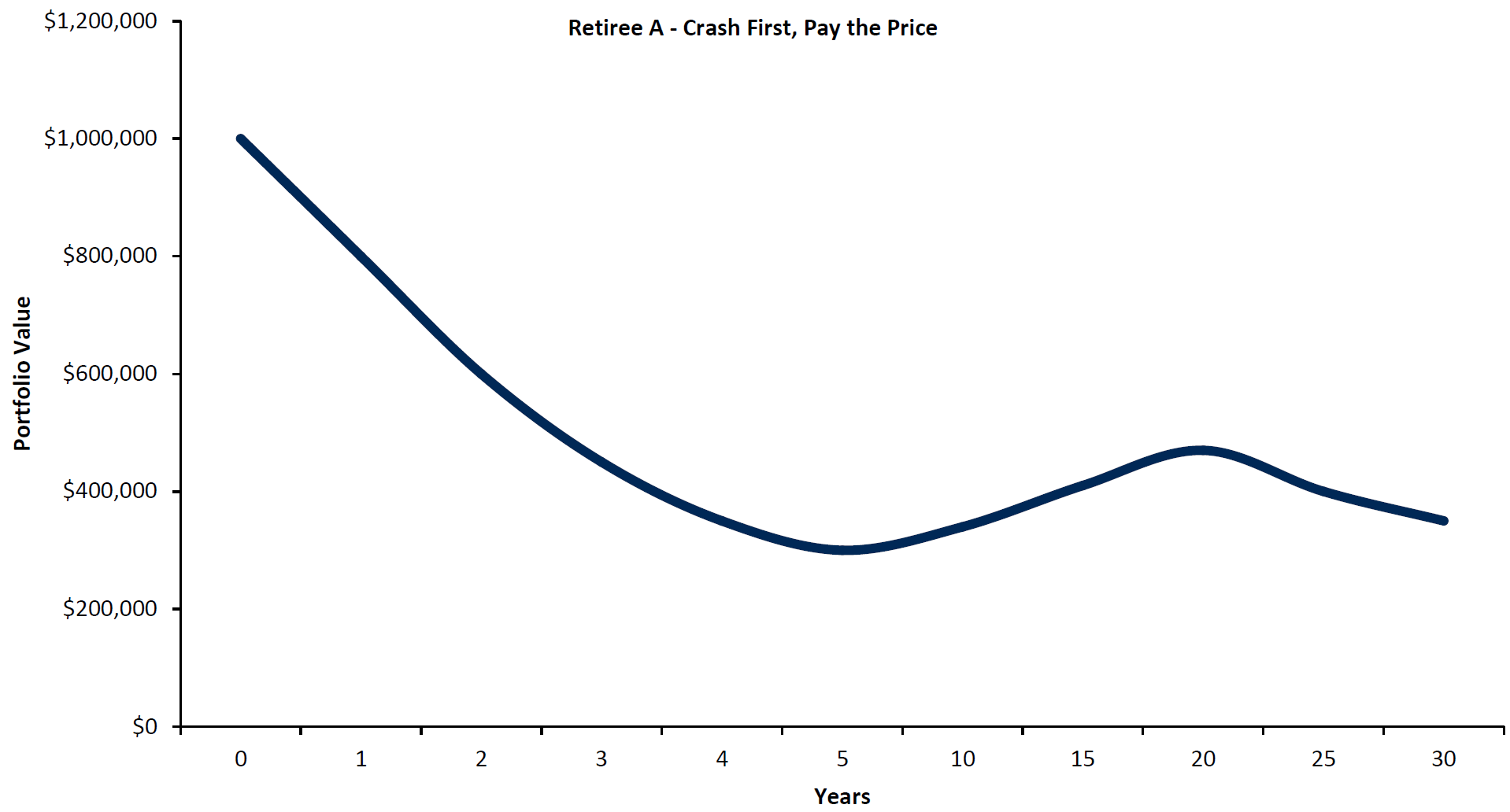
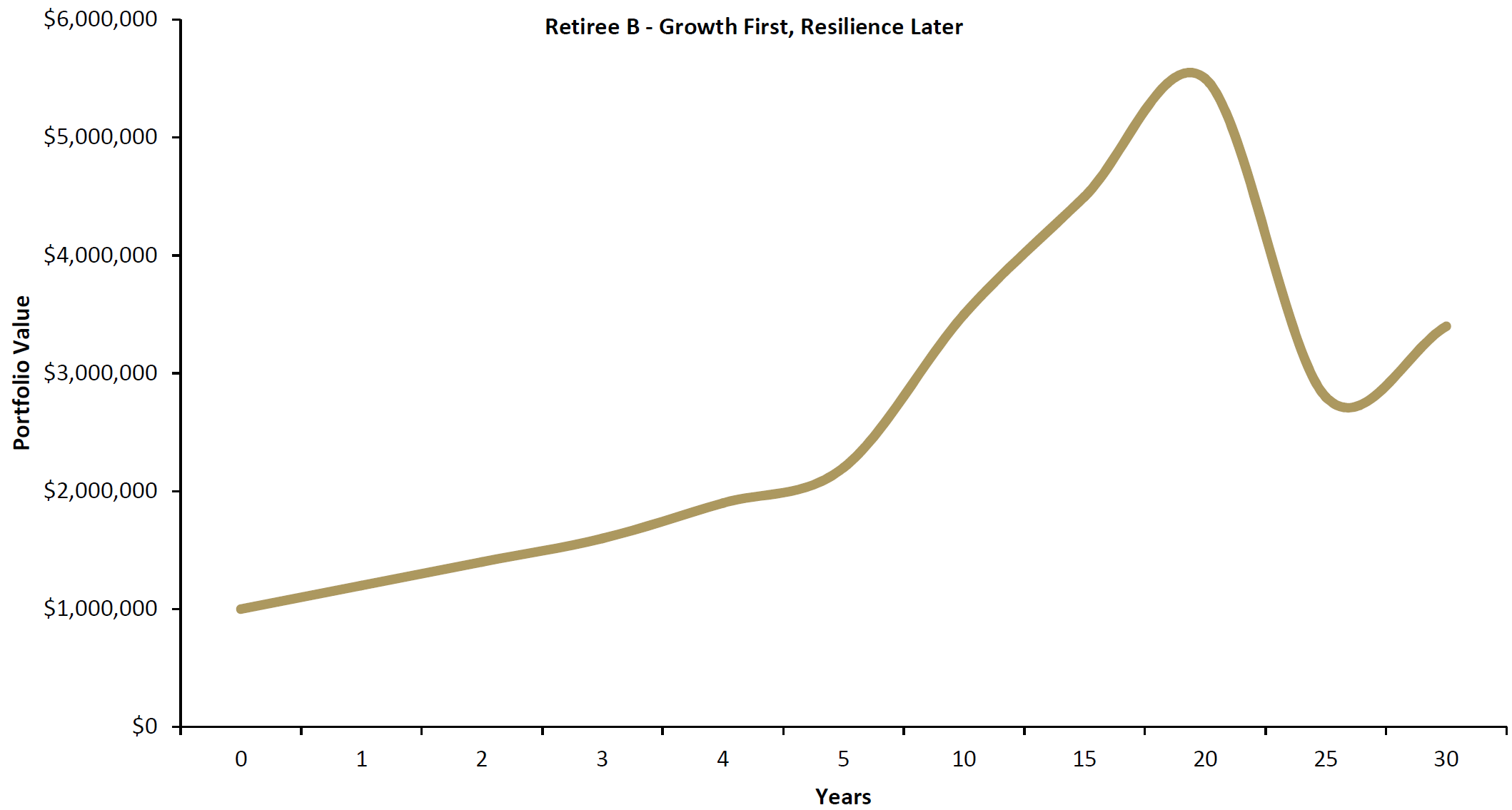
Protecting Your Retirement
The foremost step taken to protect your retirement is establishing a diversified portfolio with asset classes that do not always move in tandem to maintain alternative withdrawal sources during market downturns. Furthermore, ensuring that your Warchest is funded and ready to backstop when needed is crucial, especially during the first five years of retirement.
A core component of planning for and through volatile periods during vital milestones is our guardrails analysis, which examines the bounds of potential spending for your portfolio. Critically, this analysis affords a degree of flexibility and is designed to be adjusted upwards/downwards depending on market conditions.
Guardrails keep you on track during periods of volatility by increasing your potential spending during strong market runs or through minor, temporary spending reductions during downturns to protect your portfolio.

Ultimately, a comprehensive approach to managing sequence risk ensures that a temporary market downturn doesn’t turn into a permanent lifestyle change.