
Yields are the talk of the town, and for good reason. Equities are trading sideways but continue to be red hot for the year, or at least in the tech sector. The US Bureau of Labor Statistics has released the latest inflation figures.
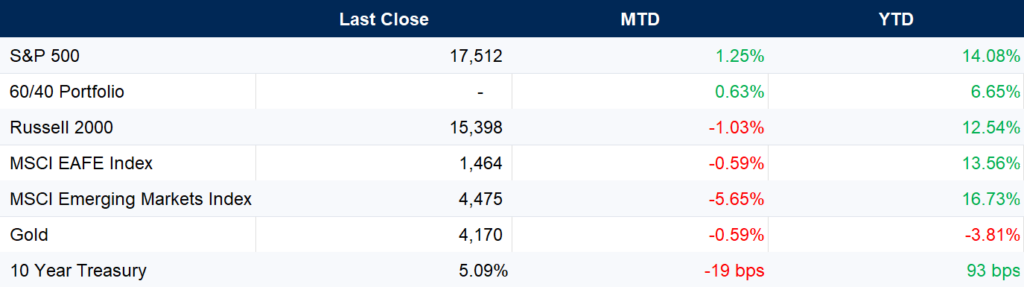
Data as of 10/15/2026 market close
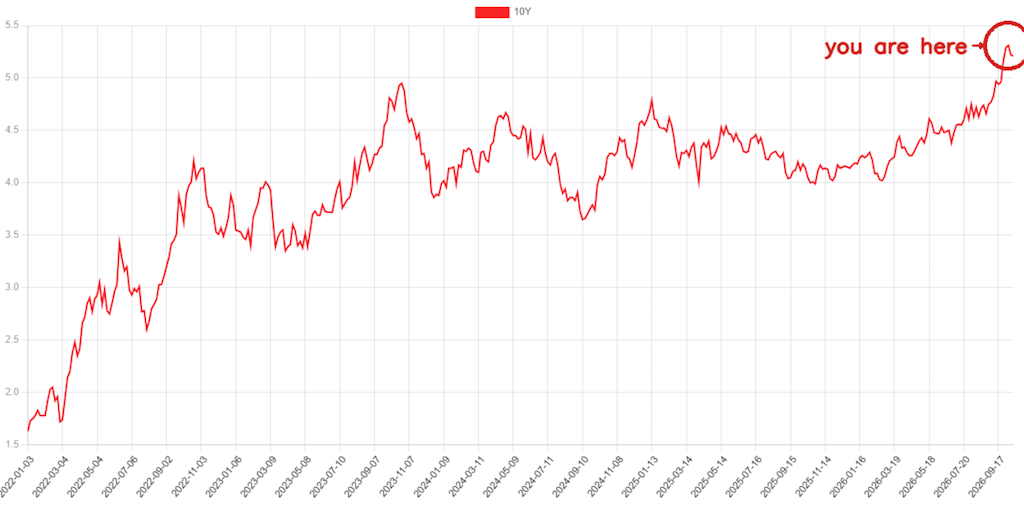
Yields: Front and Center
A Treasury yield is basically the interest rate investors are getting for lending money to the U.S. government.
What happens when Treasury yields rise?
Borrowing is more expensive; this could slow economic activity, as mortgages/business loans/auto loans, etc. are less attractive.
Currently, the 10-year Treasury Yield hit a cycle high of 5.22% (close as of 10/13) – “cycle” defined as the highest point since interest rate tightening began by “The Fed” in 2022.
EQUITIES: Flaming hot (some of them)
The tech-dominated NASDAQ-100 continues to flirt near its all-time high (reached 10/6); strong commentary and an outlook of major investment and revenue from Artificial Intelligence continue to fuel astonishing performance.
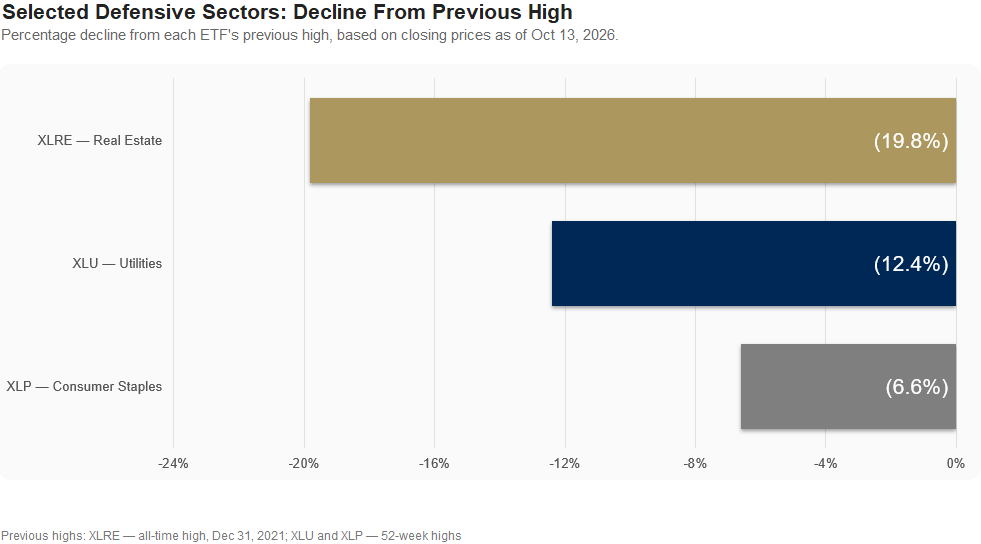
Meanwhile, some sectors aren’t doing so hot. Utilities companies are currently undergoing a correction, while Consumer Staples (think Diet Coke, Doritos, and other essentials) and Real Estate are not far behind either.
Filling up at the pump: Monotonous or Painful
According to the BLS, overall prices were higher by 0.6% in September, or 3.7% on a year-over-year basis. When excluding volatile food and energy prices, “core” inflation was up by 0.3%, or 2.6% year over year. Gasoline prices climbed 9.1% in September and 34.2% year over year, and they remain a key source of inflationary pressure.
The Federal Reserve targets a long-run inflation rate of 2%. With the above numbers in excess of this target figure, there are growing concerns from investors revolving around further interest rate hikes and economic growth in the coming quarters.
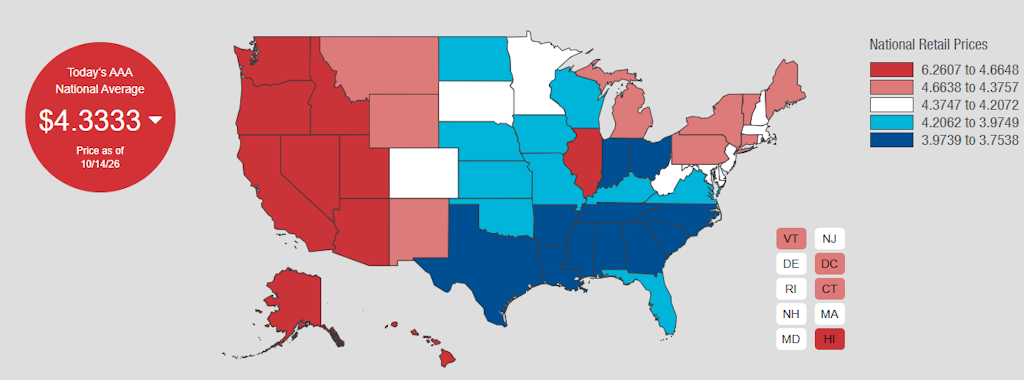
Source: AAA Fuel Prices
Closing Thoughts
Long-term Treasury yields are of concern, along with the ongoing interest payments owed by our Federal Government. In 2007, our government’s interest expense was 2.8% of GDP; that has now climbed to 4.26% of GDP today.
AI continues to be a HEAVY contributor to this market.
Regardless, the only “free lunch” in investing is diversification. Global markets have weathered countless shake-ups throughout the history of public markets. All we can look back on is history, which tells us that discipline pays off for your portfolio and your sleep quality.
This newsletter was authored by Dalton McIlrath, Financial Planner.