Tariffs have become part of everyday conversation for anyone who glances at the news these days. Ever since the Trump Administration rolled out its tariff policy in April 2025, just about everyone — from economists to relatives on social media — seems to have an opinion.
Depending on where you get your news, you’ll likely hear very different takes, some highlighting the potential benefits of tariffs, others focusing on the possible downsides.
So what are the facts? Well, let’s start with one that’s pretty hard to argue with: the U.S. economy is vast and complex, tangled up with markets all over the world. Predicting how changes like tariffs will play out with any degree of certainty is incredibly difficult, verging on impossible. Policies like tariffs don’t affect the economy overnight. It takes time for the impact to move through supply chains, influence business decisions, and show up in prices and jobs.
As of February 2026, most U.S. imports face a new 10% baseline tariff for the next 150-days after a Supreme Court ruling struck down earlier, higher tariffs, and President Trump is pushing to raise it to 15% using Section 122 of the Trade Act of 1974. Certain products, like steel, aluminum, and some cars, still have higher specific tariffs. Goods from China face especially high tariffs, often over 45%, including retaliatory measures, while products covered by the U.S.-Mexico-Canada Agreement (USMCA) are generally exempt or subject to lower rates.
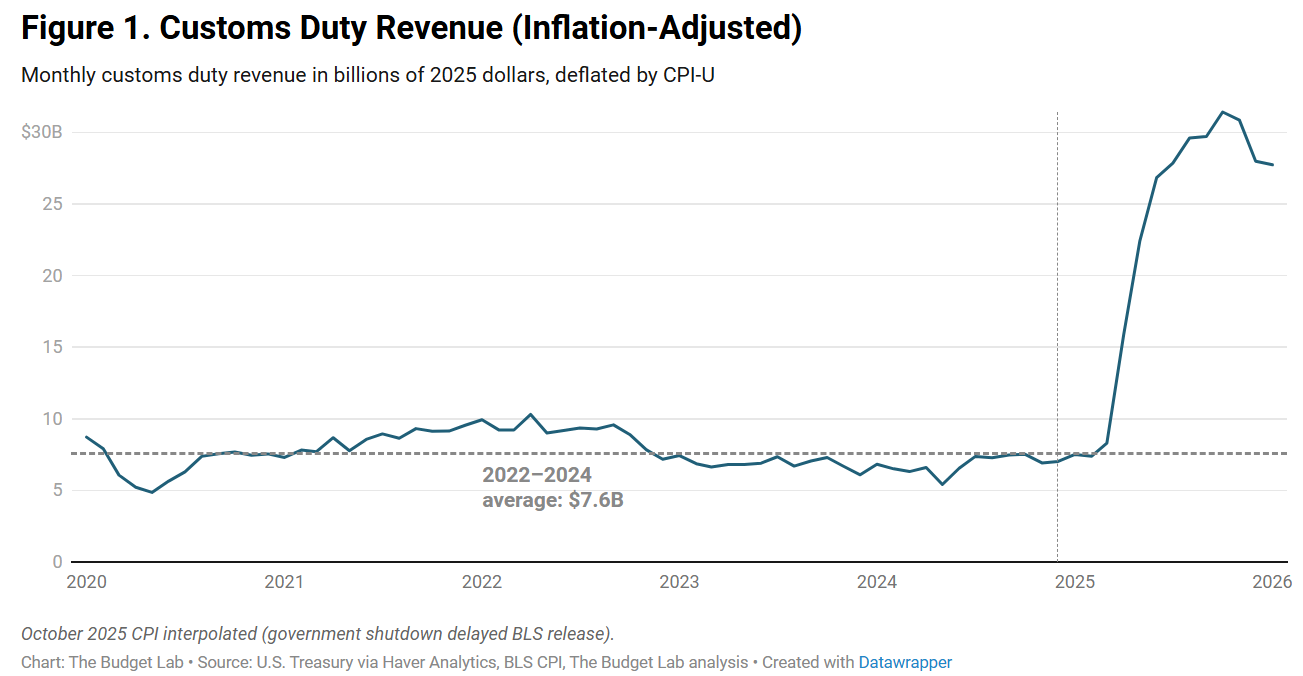
Tariff revenue
- 2025 revenues: $194.8 billion in inflation-adjusted customs revenue above the 2022–2024 average (1/2026).
- Effective tariff rate: 11.7% (11/2025).
Pass-through to consumer prices
Imported core goods (machinery, electronics, vehicles, pharmaceuticals)
- Prices rose 1.0%
- Implied costs passed to consumer range: 31–63%
Imported durable goods (items for household use)
- Prices rose 1.3%
- Implied costs passed to consumer range: 42–96%
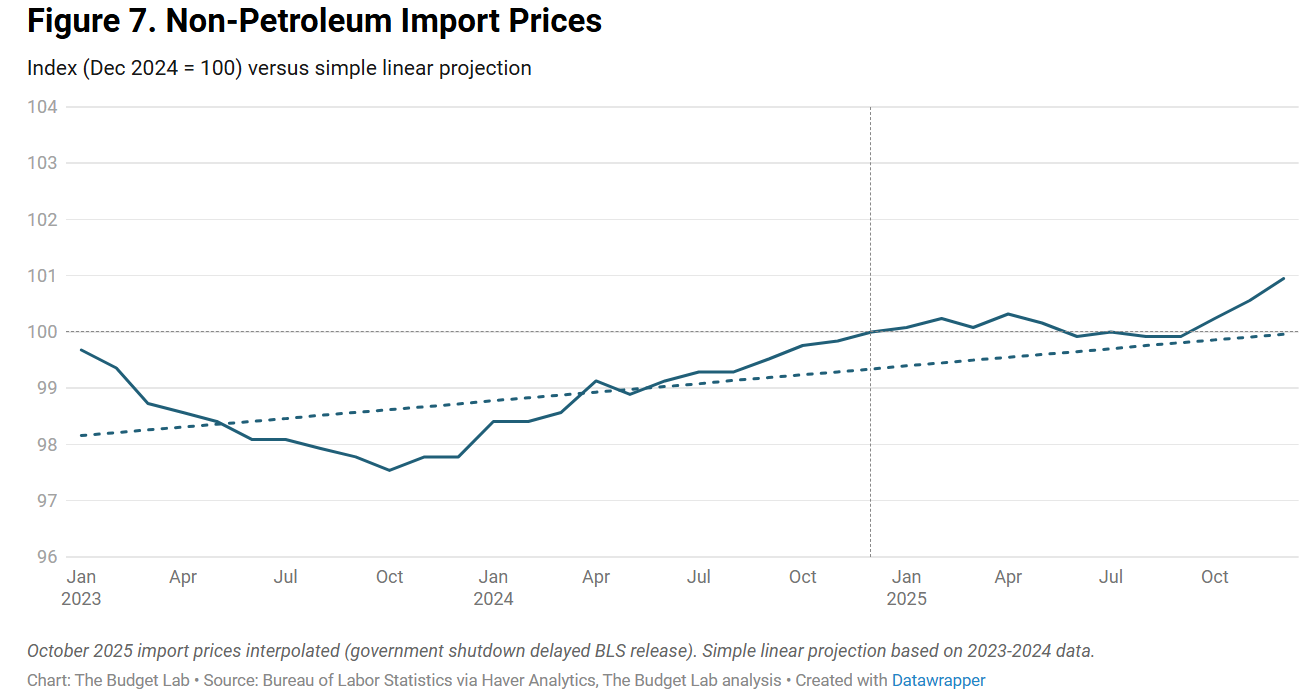
Non-petroleum imports exclude crude oil and refined petroleum products, and represent the majority of U.S. goods imports, including consumer goods, capital goods, and automotive products.
Employment
- There is no definitive indication of a significant labor market effect so far, though tariff-exposed industries show some signs of weakness relative to the pre-2025 trend.
Balance of Trade
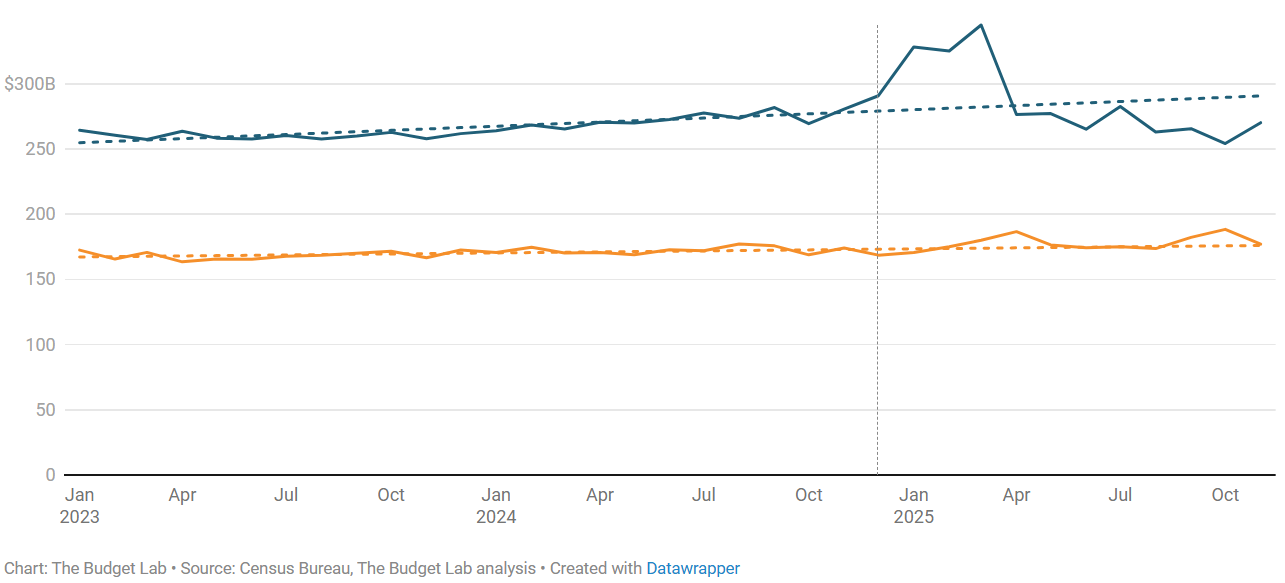
The balance of trade is a way to see if a country is selling more to other countries than it’s buying from them. When a country exports more than it imports, it has a trade surplus, meaning it’s selling more goods and services abroad than it’s bringing in. On the other hand, if a country imports more than it exports, it has a trade deficit, which means it’s buying more from other countries than it’s selling.
A country’s balance of trade is not solely driven by trade policy, but instead, reflects broader macroeconomic balances between saving, investment, net lending, and borrowing with the rest of the world. In 2025, the trade deficit fell by a relatively minor amount of $2.1 billion compared to 2024. The reduction in the trade deficit was due to an increase in the trade surplus of services, as the goods deficit actually increased by $25.5 billion year over year.
For the U.S., aiming for a trade surplus (exporting more than importing) has some potential benefits. It can boost domestic production, support jobs in key industries, add to GDP, and reduce dependence on foreign goods.
On the other hand, trying to force a surplus can lead to higher prices for consumers, risk retaliation from trading partners, and ignore the benefits imports bring, like lower costs and more choices. The U.S. attracts significant amounts of foreign investment, which naturally brings about trade deficits, and its status as the world’s reserve currency makes persistent deficits less of a problem.
In short, the U.S. trade deficit mainly reflects how American consumers, businesses, and the federal government manage savings, spending, and debt. Whether the deficit is “bad” depends largely on whether the country is borrowing and investing that money in ways that support long-term growth.