
What Can We Learn from Dividends?
The ‘dividend question’ is one that many investors encounter along their journey, and they are often met with a slew of contradictory statements. This newsletter aims to clear up some of the misconceptions and present you with a clearer picture of dividends.
Firstly, let’s revisit the purpose of dividends. Dividends are profits paid back to investors by the issuing firm. Which raises an important question: Is there a better use of those funds rather than giving them to investors? At face value, it might seem like an easy answer: Who doesn’t like to get paid?
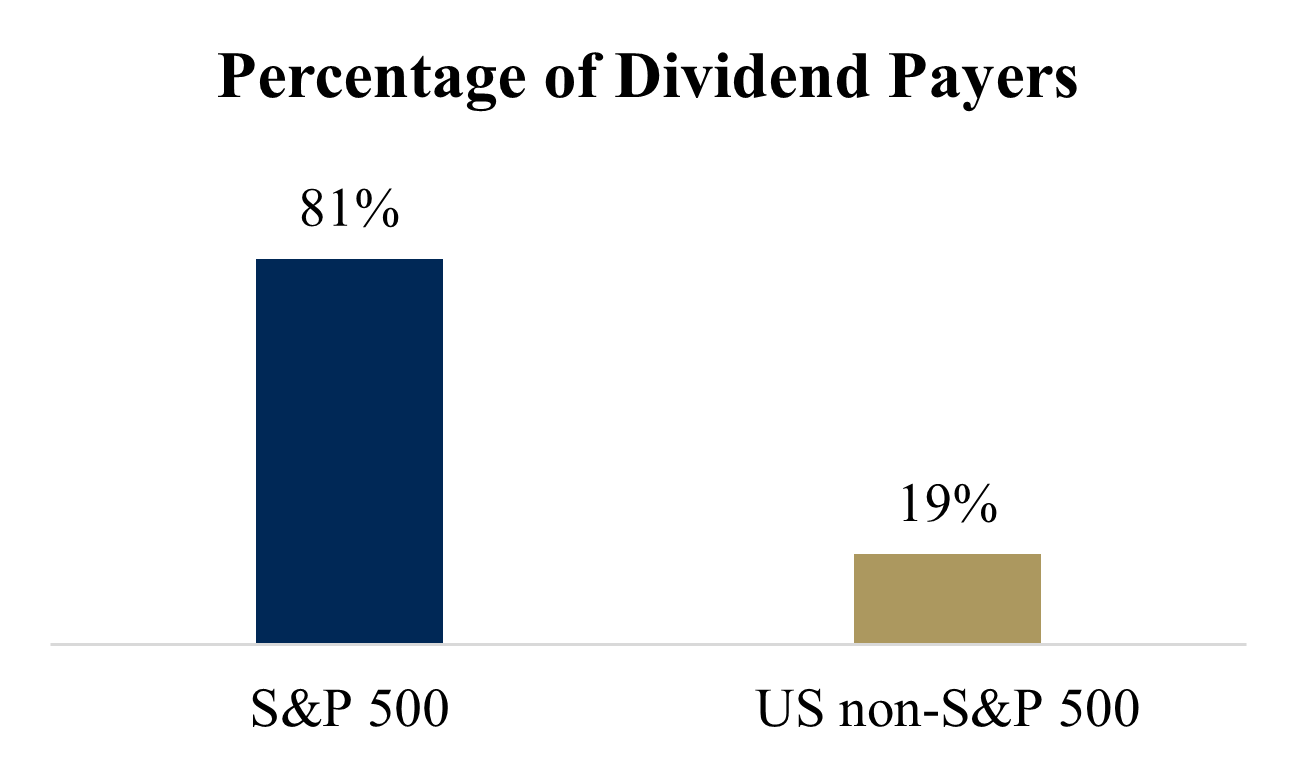
A growing firm will often have many lucrative internal projects to which it can reinvest its profits to grow even more. Thus, when a firm pays an extraordinarily high dividend, it may indicate that it lacks profitable opportunities or is unable to pursue them, as investors expect to be paid a dividend.
Today, dividend payments are mostly the domain of larger, more established companies, with smaller firms often opting to fully reinvest their earnings back into the firm in pursuit of growth.
Tax Implications
Taxes, one of life’s certainties, are never far away, and with dividends, they are always close at hand. Even when considered “qualified” (paid out by US companies) and taxed at a roughly 20% rate, dividends represent a forced tax event when held in non-retirement accounts. Namely, a dividend is a partial forced liquidation of a portion of your wealth that is taxed immediately. In contrast, price appreciation allows you to control when you sell and thus when you pay, which facilitates greater uninterrupted compounding of your wealth.
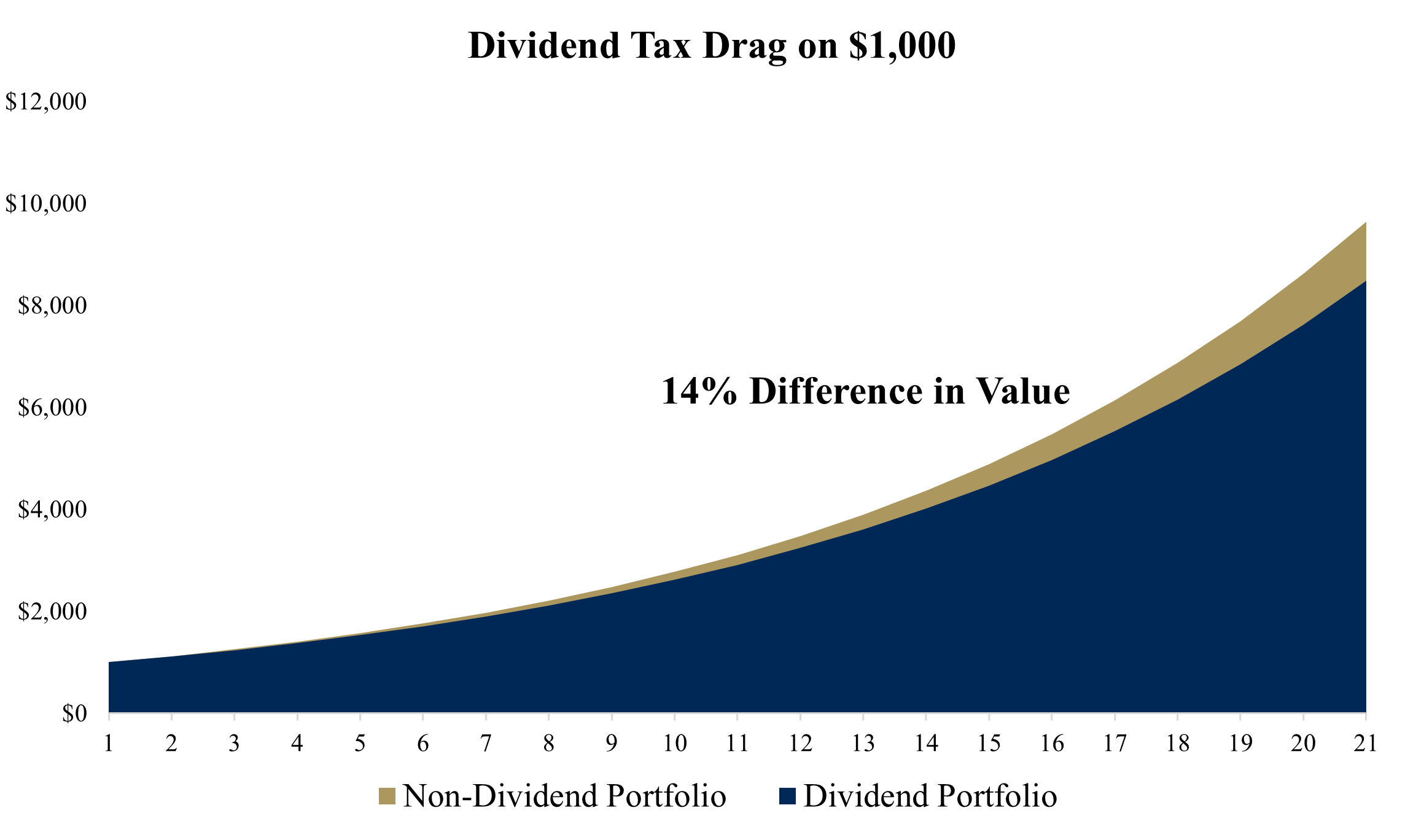
For each taxable event along your investment journey, your portfolio leaks out a small portion of its value, which leaves it with fewer assets to grow.
In contrast, if you only pay your taxes at the destination of your investment journey (when an investment is sold), there are no leaks along the way. Together, these two elements combine to define “tax drag” and the impact it can have on your portfolio if not managed appropriately.
The Hidden Dividend
Firms are aware of this tax dilemma and have adjusted their payout structure to ensure investors are rewarded in a more tax-efficient manner.
This shift comes in the form of share repurchases, where a firm buys back its own stock from investors on the open market, reducing the supply and increasing the value of shares held by investors. Thus, a share repurchase is almost always more favorable to investors relative to a dividend payment, as they receive the economic benefit without an immediate tax bill.
Strategic Takeaway
Dividends are not an end in and of themselves, and instead represent only one component of a diversified portfolio. We believe in a balanced approach that emphasizes investing in well-managed companies; those that return capital to shareholders when appropriate and reinvest thoughtfully when compelling opportunities arise.